
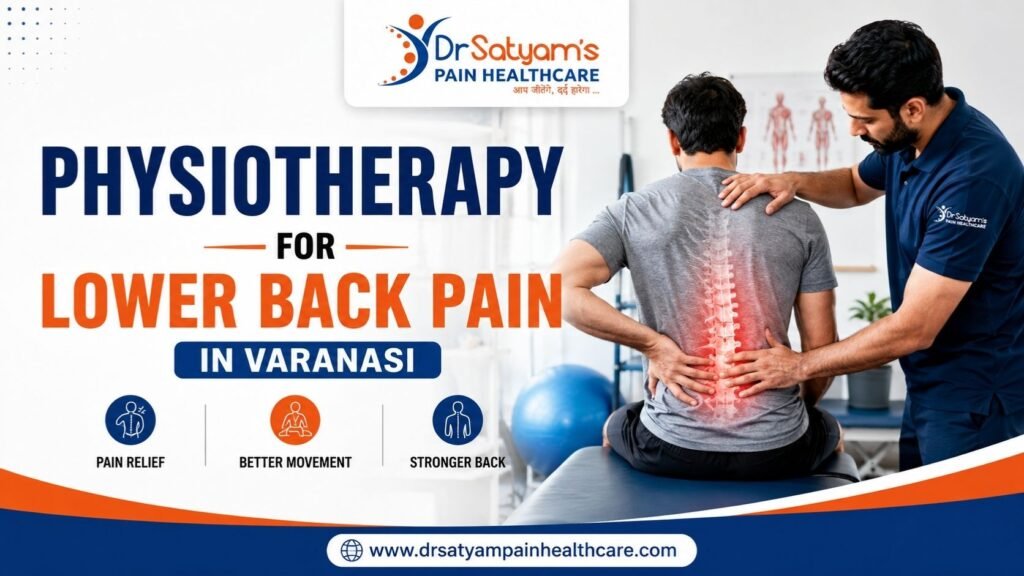
Are you struggling with lower back pain while sitting, walking, bending, or working? You are not alone. Long sitting hours, poor posture, muscle strain, slipped discs, and other issues can make everyday activities uncomfortable. The good news is that the right treatment and regular movement can often help improve pain, mobility, and strength.
In this guide to physiotherapy for lower back pain in Varanasi, you will learn about common causes and symptoms, useful physiotherapy treatments and exercises, home-care tips, warning signs, and ways to prevent back pain from returning. Keep reading to understand when physiotherapy may help and how a personalized treatment plan can support your recovery.
What Is Lower Back Pain?
Lower back pain refers to discomfort or pain felt in the area between the lower ribs and the buttocks. It may feel like a dull ache, stiffness, tightness, or sharp pain, and it can sometimes travel into the buttocks or legs. Lower back pain can affect people of any age and may make simple activities such as sitting, bending, walking, or working difficult. According to the World Health Organization (WHO), around 90% of low back pain cases are non-specific, meaning there is no single clear disease or structural problem causing the pain.
What Causes Lower Back Pain?
Lower back pain can have many causes, and in many cases, there is no single clear reason for it. About 90% of low back pain is considered non-specific, meaning it cannot be linked to one specific disease or structural problem. Muscle strain, reduced physical activity, prolonged sitting, excess body weight, and physical stress at work can all increase the risk.
Muscle Strain and Overuse
A sudden movement, heavy lifting, repeated bending, or intense physical activity can strain the muscles and other tissues around the lower back. This may cause pain, stiffness, or difficulty moving. Muscle or ligament strain is one of the common causes of back pain.
Poor Posture and Prolonged Sitting
Spending many hours sitting at a desk, working on a laptop, driving, or staying in one position can place extra stress on the lower back. Poor sitting habits and limited movement may contribute to discomfort, especially when combined with weak muscles or low physical activity.
Slipped or Herniated Disc
A slipped disc, also called a herniated or prolapsed disc, occurs when the soft tissue between the spinal bones bulges outward. If it irritates a nearby nerve, it can cause lower back pain along with leg pain, tingling, numbness, or weakness.
Sciatica and Nerve Irritation
Sciatica happens when the sciatic nerve is irritated or compressed. It can cause pain that travels from the lower back into the buttocks and down the leg. A herniated disc is one common cause, while spinal narrowing, spondylolisthesis, and back injuries can also contribute.
Age-Related Changes
As we get older, natural changes can occur in the spinal joints and discs. These changes may sometimes contribute to lower back pain or reduced movement. However, age-related changes seen on scans do not always mean that they are the direct cause of pain.
Weak Muscles and Low Physical Activity
Weakness around the core, hips, and legs, along with a generally inactive lifestyle, may make everyday movements more difficult. Regular physical activity and appropriate strengthening can support better movement and function.
Other Possible Causes
Less common causes include conditions such as spinal stenosis, spondylolisthesis, ankylosing spondylitis, fractures, infections, or other medical conditions. Most lower back pain is not caused by a serious disease, but persistent or unusual symptoms should be assessed by a qualified healthcare professional.
What Are the Symptoms of Lower Back Pain?
Lower back pain can feel different from person to person. Some people may have a mild ache or stiffness, while others may feel sharp pain that makes walking, bending, or sitting difficult. Recognizing the symptoms can help you understand when physiotherapy for lower back pain in Varanasi may be useful and when professional medical assessment is needed.
Common Symptoms of Lower Back Pain
The most common symptoms include:
- Aching or dull pain in the lower back
- Sharp or sudden pain, especially after lifting or twisting
- Stiffness after waking up or sitting for a long time
- Muscle tightness or spasms around the lower back
- Pain that becomes worse while bending, sitting, standing, or walking
- Reduced flexibility or difficulty moving the lower back
- Pain that improves or worsens with certain positions or activities
- Difficulty performing everyday activities because of back pain
Can Physiotherapy Help Lower Back Pain?
Yes, physiotherapy can help many people with lower back pain by improving movement, strength, flexibility, and physical function. The right approach depends on the cause, duration, symptoms, and individual needs. For many people, active rehabilitation and exercise are important parts of managing lower back pain.
How Can Physiotherapy Help Lower Back Pain?
A physiotherapist first assesses your pain, movement, muscle strength, flexibility, posture, and daily activities. Based on the findings, a personalized treatment plan may include therapeutic exercises, mobility exercises, strengthening, posture correction, movement training, and other appropriate physical therapy techniques. The goal is not only to reduce pain but also to help you move better and return to normal activities.
Is Physiotherapy Effective for Chronic Lower Back Pain?
For people with chronic primary low back pain, the World Health Organization (WHO) recommends exercise programs and certain physical therapies as part of non-surgical care. WHO also emphasizes education, self-care, physical activity, and a personalized approach rather than relying on a single treatment for everyone.
What Can You Expect From Physiotherapy for Lower Back Pain in Varanasi?
Treatment may vary from person to person. Your physiotherapist may focus on:
- Pain management: Helping you understand and manage your symptoms.
- Exercise therapy: Building core, hip, and back strength where appropriate.
- Mobility: Improving flexibility and comfortable movement.
- Posture and movement correction: Identifying habits that may be contributing to discomfort.
- Functional recovery: Helping you safely return to work, exercise, and daily activities.
- Home exercises: Giving you practical exercises and self-care guidance to continue your progress.
Physiotherapy for Lower Back Pain in Varanasi: What Does Treatment Involve?
Physiotherapy for lower back pain in Varanasi usually begins with a detailed assessment to understand what may be causing the pain and how it affects your daily activities. A physiotherapist may check your posture, spinal movement, muscle strength, flexibility, balance, and pain pattern. If you have symptoms such as pain spreading into the leg, numbness, or weakness, they may also perform appropriate nerve-related checks. This assessment helps create a treatment plan based on your specific needs rather than using the same approach for everyone.
Initial Assessment and Diagnosis
During your first visit, the physiotherapist may ask about:
- When your lower back pain started
- Activities that make the pain better or worse
- Previous injuries or treatments
- Your sitting, standing, and working habits
- Pain that travels into the hip or leg
- Changes in strength, movement, or daily activities
The goal is to understand your condition and decide whether physiotherapy is suitable or whether you need further medical evaluation.
Personalized Exercise Therapy
Exercise is an important part of many lower back pain physiotherapy programmes. Depending on your condition, exercises may include core strengthening, stretching, mobility exercises, muscle strengthening, movement-control exercises, and gradual physical activity. A physiotherapist can adjust the exercises according to your ability and progress. WHO recommends structured exercise as part of care for chronic primary low back pain and emphasizes tailoring programmes to the individual.
Manual Therapy and Other Techniques
When appropriate, treatment may also include hands-on techniques to help improve movement and manage pain. Depending on the assessment, a physiotherapist may use manual therapy, soft-tissue techniques, or other supportive methods alongside exercise. These approaches should complement active rehabilitation rather than replace it. For chronic primary low back pain, WHO lists some physical therapies, including spinal manipulative therapy and massage, as options that may be offered as part of broader care.
Posture, Movement, and Daily Activity Guidance
Your physiotherapy plan may also focus on how you sit, stand, bend, lift, sleep, and move during daily activities. You may receive advice on workplace ergonomics, movement breaks, safe activity, and exercises that can be continued at home. Staying appropriately active and learning self-management strategies are important parts of managing lower back pain.
Progress Monitoring and Home Exercises
Your progress can be reviewed throughout treatment. Exercises and activities may be changed as your strength, movement, and comfort improve. You may also receive a home exercise programme to continue your rehabilitation between appointments. The aim of back pain physiotherapy is not simply to reduce pain for a short time, but to help you move better, return to daily activities, and develop habits that support long-term back health.
Which Exercises Are Commonly Used for Lower Back Pain?
Physiotherapy exercises for lower back pain can help improve flexibility, muscle strength, movement, and daily function. The right exercises depend on the cause of pain, your symptoms, fitness level, and overall health. This is why a physiotherapist may create a personalized exercise plan instead of giving the same routine to everyone.
Core Strengthening Exercises
Core exercises help strengthen the muscles around your abdomen, pelvis, and lower back. A stronger core can improve movement control and support everyday activities such as walking, bending, and lifting.
Common options may include:
- Abdominal bracing
- Pelvic tilts
- Modified bridges
- Gentle core stability exercises
Lower Back Mobility Exercises
Gentle mobility exercises can help reduce stiffness and improve comfortable movement. Depending on the person’s condition, a physiotherapist may recommend controlled movements that gently move the lower back through a suitable range.
These exercises should feel controlled rather than forceful. Avoid pushing through sharp or worsening pain.
Hip and Hamstring Flexibility Exercises
Tight muscles around the hips and legs may affect how you move and place extra demands on the lower back. Gentle hip and hamstring stretches may therefore be included in a lower back pain physiotherapy program when appropriate.
Stretching should be slow and comfortable. Bouncing or forcing a stretch is generally not recommended.
Glute Strengthening Exercises
The muscles around the hips and buttocks play an important role in movement and stability. Exercises such as modified bridges and other glute-strengthening movements may be included to improve strength and support functional movement.
Walking and Gentle Aerobic Activity
Walking can be a simple way to stay active while recovering from lower back pain. Short, comfortable walks may be increased gradually according to your symptoms and fitness level. Staying active is generally encouraged rather than remaining in bed for long periods.
Movement-Control Exercises
Some people may benefit from exercises that teach better control of the spine, pelvis, hips, and surrounding muscles during everyday movements. These may be useful for people who have difficulty with bending, lifting, sitting, or other activities.
Exercises Should Be Personalized
There is no single best exercise for lower back pain that works for everyone. Exercise programs may include strengthening, stretching, aerobic activity, core exercises, flexibility work, motor-control exercises, Pilates, yoga, or a combination of approaches. WHO notes that current evidence does not show one exercise type to be universally better than another, so the program should match the person’s needs and preferences.
Physiotherapy for Different Types of Lower Back Pain
Lower back pain does not have the same cause for everyone. It may come from muscle strain, prolonged sitting, poor posture, a disc problem, nerve irritation, or age-related changes. Because of this, physiotherapy for lower back pain in Varanasi should be based on the person’s symptoms, movement, medical history, and physical assessment rather than using the same treatment for every patient.

Physiotherapy for Sciatica
Sciatica can cause lower back pain that travels into the buttock or leg, sometimes with tingling, numbness, or weakness. Physiotherapy for sciatica may focus on improving movement, building strength, and helping the person return to normal activities. The treatment plan depends on the cause and severity of the symptoms.
Physiotherapy for Slipped or Herniated Disc
A slipped or herniated disc may irritate nearby nerves and cause back or leg pain. A physiotherapist can assess movement and function and develop a gradual rehabilitation plan that may include specific exercises, mobility work, strengthening, and advice on daily activities. Severe or worsening neurological symptoms need medical evaluation.
Physiotherapy for Lumbar Spondylosis
Lumbar spondylosis refers to age-related changes in the lower spine. It may be associated with stiffness, reduced movement, or recurring back pain. Physiotherapy can help maintain mobility, improve muscle strength, and support daily function through an individualized exercise and rehabilitation program.
Physiotherapy for Posture-Related Back Pain
Long periods of sitting, poor workplace setup, and limited physical activity can contribute to back discomfort. Treatment may include posture education, movement breaks, mobility exercises, strengthening, and ergonomic advice. The goal is not simply to “fix posture,” but to help you move comfortably and stay active.
Physiotherapy for Muscle-Related Lower Back Pain
Muscle strain can occur after lifting, exercise, sudden movement, or physical overuse. Depending on the symptoms, physiotherapy may include gentle movement, progressive strengthening, flexibility exercises, and guidance on returning safely to normal activities.
Physiotherapy for Chronic Lower Back Pain
When lower back pain continues for more than 12 weeks, it is considered chronic. Management often requires more than treating the painful area alone. Exercise, education, physical rehabilitation, and lifestyle changes can form part of a personalized approach. WHO recommends person-centred, non-surgical care for chronic primary low back pain rather than relying on a single treatment in isolation.
Physiotherapy After Back Surgery
Some people may require physiotherapy after spinal surgery to safely rebuild strength, mobility, and confidence. The rehabilitation plan should follow the surgeon’s instructions and the individual’s recovery stage. Physiotherapy is not a replacement for medical follow-up after surgery.
When Should You See a Physiotherapist for Lower Back Pain?
Lower back pain does not always require professional treatment, but you should consider seeing a physiotherapist when pain lasts, keeps returning, or starts affecting your daily life. Physiotherapy for lower back pain in Varanasi can help identify movement problems, muscle weakness, posture issues, and other factors that may be contributing to your pain. A physiotherapist can then create a treatment and exercise plan based on your condition.
Pain That Does Not Improve
If your lower back pain continues for several days or weeks without improving, a professional assessment can help identify the possible cause. This is especially important when rest and simple home-care measures are not providing relief.
Pain That Affects Daily Activities
Consider physiotherapy if back pain makes it difficult to:
- Walk or stand for long periods
- Bend or move normally
- Sit at work or study
- Sleep comfortably
- Exercise or perform household activities
- Lift or carry everyday objects
A back pain physiotherapist in Varanasi can assess your movement and help you gradually return to normal activities.
Pain That Keeps Coming Back
Repeated episodes of lower back pain may be linked to poor movement patterns, muscle weakness, reduced flexibility, prolonged sitting, or other factors. Physiotherapy can focus on improving strength, mobility, posture, and movement habits to support long-term back pain management.
Back Pain With Leg Symptoms
If lower back pain travels into the buttock or leg, or you experience tingling, numbness, or weakness, it may involve nerve irritation such as sciatica. These symptoms should be properly assessed rather than treated with exercises chosen at random.
After an Injury or Physical Strain
Back pain following a fall, sports injury, sudden twisting movement, or heavy lifting may benefit from professional evaluation. A physiotherapist can check your movement and help determine an appropriate rehabilitation approach.
Why Choose Dr. Satyam’s Pain Healthcare for Lower Back Pain in Varanasi?
When lower back pain starts affecting your work, sleep, walking, or daily activities, choosing the right healthcare provider can make a difference. Dr. Satyam’s Pain Healthcare provides personalized care for people looking for physiotherapy for lower back pain in Varanasi. Dr. Satyam Jaiswal focuses on understanding the possible cause of pain and creating a treatment approach based on each patient’s symptoms, movement, posture, strength, and daily needs.
Personalized Lower Back Pain Treatment by Dr. Satyam
Every case of back pain is different. Dr. Satyam Jaiswal assesses the patient’s condition before recommending suitable physiotherapy and rehabilitation techniques. Depending on the individual’s needs, treatment may include exercise therapy, mobility exercises, manual techniques, posture correction, and other pain-management approaches. This personalized approach can be helpful for people seeking lower back pain treatment in Varanasi.
Experience in Physiotherapy and Chiropractic Care
Dr. Satyam’s Pain Healthcare combines physiotherapy and chiropractic care to address different musculoskeletal and movement-related problems. Dr. Satyam Jaiswal provides care for conditions associated with lower back pain, sciatica, disc-related problems, posture issues, and other musculoskeletal conditions, helping patients work toward better movement and daily function.
Focus on Exercise and Rehabilitation
Long-term improvement often involves more than temporary pain relief. Under Dr. Satyam Jaiswal’s physiotherapy care, patients can receive guidance on suitable exercises, mobility, posture, and movement habits. These strategies can help improve strength and function while supporting recovery outside the clinic.
Lower Back Pain Physiotherapy in Varanasi
If you are searching for a physiotherapist for back pain in Varanasi, Dr. Satyam’s Pain Healthcare offers personalized physiotherapy and pain-management services. The clinic also provides homecare physiotherapy for patients who may find it difficult to visit the clinic because of mobility problems or other practical needs.
If lower back pain is limiting your daily activities, consulting Dr. Satyam Jaiswal for physiotherapy in Varanasi can help you understand your condition and choose an appropriate treatment and rehabilitation plan.
Also Read: https://drsatyampainhealthcare.com/physiotherapy-for-frozen-shoulder/
Conclusion
Lower back pain can make simple activities like sitting, walking, bending, and working difficult.
Physiotherapy for Lower Back Pain in Varanasi can help improve mobility, strength, and everyday function when the treatment is suited to your condition.
At Dr. Satyam’s Pain Healthcare, treatment focuses on personalized physiotherapy, exercise therapy, posture correction, and pain management.
Dr. Satyam Jaiswal also provides care for related problems such as sciatica, disc-related pain, and posture-related back pain.
Regular exercises and healthy movement habits can support recovery and help reduce the risk of recurring pain.
If your back pain continues or affects your daily life, a professional assessment can help identify the right treatment approach.
With appropriate lower back pain treatment in Varanasi, patients can work toward better movement and an improved quality of life.
Frequently Asked Questions
1. Can physiotherapy help with lower back pain?
Yes, physiotherapy can help many people with lower back pain by improving movement, flexibility, strength, and physical function. A physiotherapist may use exercises, manual techniques, posture correction, and rehabilitation based on the person’s condition and symptoms.
2. What is the best treatment for lower back pain in Varanasi?
The best treatment depends on the cause, severity, duration, and symptoms of your back pain. Lower back pain treatment in Varanasi may include exercise therapy, physiotherapy, posture correction, mobility training, and other approaches recommended after a proper assessment.
3. Which exercises are good for lower back pain?
Exercises for lower back pain may include gentle mobility movements, core strengthening, hip exercises, stretching, and walking. However, the right exercises depend on the cause of pain, so it is better to follow a personalized exercise plan from a qualified physiotherapist.
4. How long does physiotherapy take for lower back pain?
Recovery time varies from person to person and depends on the cause, severity, duration of pain, physical condition, and response to treatment. Your physiotherapist can suggest an appropriate treatment schedule after assessing your symptoms and functional limitations.
5. Can physiotherapy help with sciatica?
Yes, physiotherapy can help many people with sciatica by addressing movement limitations, strength, flexibility, and functional problems. Treatment may include specific exercises and rehabilitation strategies based on the symptoms and possible cause of nerve irritation.
6. Can physiotherapy help with a slipped disc?
Physiotherapy may help people with symptoms related to a slipped or herniated disc by improving movement, strength, and physical function. The treatment plan should be individualized, particularly when pain, numbness, tingling, or weakness extends into the leg.
7. Can poor posture cause lower back pain?
Poor posture and prolonged sitting may contribute to back discomfort, especially when combined with limited movement and muscle weakness. Posture correction, regular movement breaks, ergonomic changes, and appropriate exercises may help reduce strain and improve daily movement habits.
8. Should I rest or exercise when I have lower back pain?
For many common types of lower back pain, staying gently active is generally preferred over prolonged bed rest. However, activities that significantly increase pain should be avoided, and people with severe or unusual symptoms should seek professional medical advice.
9. When should I see a physiotherapist for back pain?
Consider seeing a physiotherapist when back pain persists, keeps returning, limits daily activities, or affects movement and exercise. If back pain occurs with severe weakness, loss of bladder or bowel control, numbness around the groin area, or other serious symptoms, seek urgent medical care.
10. Can chiropractic care help lower back pain?
Chiropractic care may help some people with certain types of musculoskeletal lower back pain. The appropriate approach depends on an individual assessment, symptoms, and medical history. Dr. Satyam Jaiswal provides chiropractic and physiotherapy care based on the patient’s specific needs.
11. Can lower back pain be treated without surgery?
Many cases of lower back pain can be managed without surgery, particularly when there is no serious underlying condition. Treatment may include physiotherapy, exercise, activity modification, posture improvement, and other conservative approaches recommended by a healthcare professional.
12. Where can I get physiotherapy for lower back pain in Varanasi?
People looking for physiotherapy for lower back pain in Varanasi can consult Dr. Satyam’s Pain Healthcare for an individualized assessment and rehabilitation plan. Dr. Satyam Jaiswal provides physiotherapy and pain-management care for back pain and related musculoskeletal conditions.