
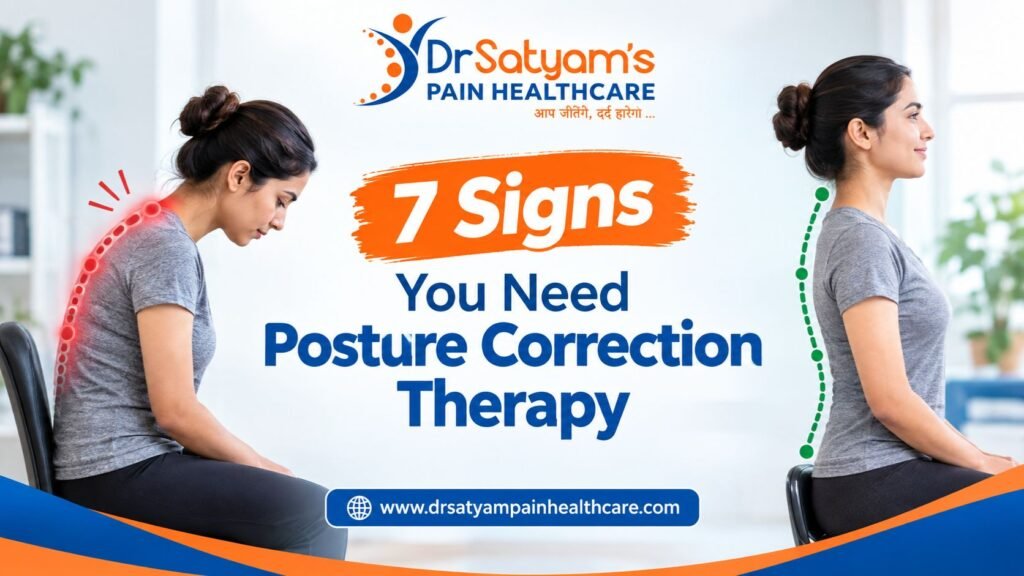
Do you often experience neck stiffness, back pain, rounded shoulders, or muscle tightness after sitting for long hours? These can be common signs of poor posture and may affect the way you sit, stand, and move every day. With proper posture assessment and guidance from professionals like Dr. Satyam Jaiswal, you can understand what may be affecting your posture and take steps toward better spinal alignment and comfortable movement.
But how do you know when you actually need posture correction therapy? If your posture problems, neck pain, back pain, or stiffness keep returning despite changing your daily habits, professional guidance may be helpful. In this blog, we’ll explore 7 important signs of poor posture, common causes, and how posture correction treatment can support healthier movement and better posture.
What Is Posture Correction Therapy?
Posture correction therapy is a personalized approach that helps improve the way your body is positioned and moves during everyday activities. It focuses on identifying factors such as poor posture, muscle weakness, tight muscles, limited mobility, and unhealthy movement habits. Depending on your needs, a professional may use posture assessment, corrective exercises, stretching, strengthening, ergonomic guidance, and other suitable therapies to support better alignment and movement.
How Does Posture Correction Therapy Work?
The first step is usually a posture assessment to understand how you sit, stand, walk, and move. A professional may check your spinal alignment, shoulder and hip position, muscle flexibility, strength, and movement patterns. Based on these findings, a personalized posture correction treatment plan can be developed.
What Does Posture Correction Therapy Include?
Depending on the individual’s condition and goals, posture correction may include:
- Corrective exercises to improve muscle strength and control
- Stretching and mobility exercises for tight muscles and restricted movement
- Core and upper-back strengthening to support better body control
- Ergonomic guidance for sitting, working, studying, or using electronic devices
- Postural retraining to develop healthier movement habits
- Manual or chiropractic techniques, when appropriate after assessment
- A simple home exercise program to maintain progress between sessions
7 Signs You Need Posture Correction Therapy
You may need posture correction therapy if poor posture is causing repeated pain, stiffness, muscle tension, or difficulty with everyday movements. While occasional discomfort does not always mean you have a posture problem, persistent or recurring symptoms can be a reason to consider a professional posture assessment. Here are 7 common signs to watch for.
1. Frequent Neck Pain or Stiffness
Do you often wake up with a stiff neck or develop neck pain after working on a computer or using your phone? Poor sitting posture and forward head posture can place extra strain on the muscles around your neck and shoulders. If the discomfort keeps returning, posture correction may help identify habits or movement problems that could be contributing to it.
2. Recurring Back or Lower Back Pain
Back pain that appears after sitting, standing, or working for long periods may sometimes be linked to poor posture or limited movement. Slouching can change how your body distributes pressure and may increase muscle strain. However, back pain can have many causes, so persistent pain should not automatically be blamed on posture alone.
3. Rounded Shoulders or Frequent Slouching
If your shoulders naturally move forward or you frequently find yourself sitting in a slouched position, it may indicate a postural imbalance. Rounded shoulders can become common with prolonged desk work, excessive screen time, or weak upper-back muscles. Posture correction exercises and better movement habits may help improve body awareness and alignment.
4. Your Head Sits Too Far Forward
Look at yourself from the side while standing naturally. If your head appears noticeably in front of your shoulders, you may have forward head posture. This is often associated with long periods of looking down at phones, laptops, or other screens. It may contribute to neck tension and upper-back discomfort and can be addressed through appropriate posture and movement training.
5. Frequent Muscle Tightness or Fatigue
Constant tightness in your neck, shoulders, upper back, or hips can be another warning sign. You may also feel unusually tired after sitting or standing in one position for a long time. Poor movement patterns, muscle weakness, or limited flexibility can contribute to these problems. A professional assessment can help identify which areas may need strengthening, stretching, or improved mobility.
6. You Cannot Sit or Stand Comfortably for Long
If you regularly change positions because sitting or standing becomes uncomfortable, your posture and movement habits may need attention. This is especially common among desk workers, students, drivers, and people who spend many hours on screens. Improving sitting posture, workstation setup, and regular movement can make everyday activities more comfortable.
7. Your Posture Keeps Getting Worse Despite Your Efforts
Have you tried sitting straight, stretching, or doing posture correction exercises, but your posture quickly returns to the same position? This may suggest that simply trying to “sit straight” is not addressing the underlying movement or muscle-related factors. Posture correction therapy with Dr. Satyam Jaiswal can involve understanding your individual posture, movement patterns, and daily habits to guide a more suitable correction plan.
What Causes Poor Posture?
Poor posture usually develops from everyday habits, muscle imbalances, limited movement, or activities that keep the body in the same position for too long. Understanding the cause is an important part of posture correction therapy, because the right approach depends on what is affecting your posture.
Prolonged Sitting
Sitting for many hours, especially at a desk, can encourage slouching, rounded shoulders, and forward head posture. Over time, the muscles that support your spine may become weak or tight, making it harder to maintain a comfortable sitting position.
Excessive Smartphone and Screen Use
Looking down at a phone or laptop for long periods can place your head forward and increase tension around the neck and shoulders. This is often linked with text neck, neck stiffness, and upper-back discomfort.
Poor Workstation Setup
A desk, chair, or computer that is not positioned properly can make you lean forward, raise your shoulders, or bend your neck. Poor ergonomics can gradually affect your sitting posture, especially if you work at a desk every day.
Weak Core and Back Muscles
Your abdominal, back, and hip muscles help support your body during movement and everyday activities. Weakness in these muscles can make it more difficult to maintain good postural alignment, particularly when sitting or standing for long periods.
Tight Muscles and Limited Mobility
Tight chest, hip, hamstring, or neck muscles can restrict normal movement and contribute to posture problems. Limited flexibility may cause the body to compensate by changing the position of the shoulders, pelvis, or spine.
Lack of Physical Activity
A sedentary lifestyle can reduce muscle strength, flexibility, and body awareness. Regular movement and appropriate strengthening exercises can help support better posture and may form an important part of posture correction treatment.
Previous Injuries or Pain
An old injury may change the way you move or distribute your weight. If you continue to protect a painful area, other muscles and joints may have to work differently, which can contribute to poor posture over time.
Repetitive Daily Habits
Repeatedly standing, sitting, lifting, driving, or working in the same position can affect movement patterns. Small habits repeated every day can gradually become difficult to change without proper awareness and guidance.
How Can You Check Your Posture at Home?
You can do a simple posture assessment at home to notice common signs of poor posture, such as rounded shoulders, forward head posture, uneven shoulders, or excessive slouching. A home check cannot diagnose a medical condition, but it can help you understand whether your everyday posture may need more attention or professional posture correction therapy.
Wall Posture Test
A wall test is a simple way to observe your body alignment:
- Stand with your back against a wall and keep your feet comfortably apart.
- Keep your head facing straight ahead and relax your shoulders.
- Notice how your head, shoulders, upper back, and hips line up.
- Check whether there is a very large gap between your lower back and the wall.
- Avoid forcing your head or back against the wall just to look straight.
Your spine naturally has gentle curves, so you should not expect every part of your body to touch the wall. The goal is to observe your posture and spinal alignment, not to force your body into a perfectly straight position.
Check Your Sitting Posture
Your sitting position can reveal a lot about your daily posture. Sit on a chair and check whether your feet are supported, your back is comfortably supported, and your shoulders are relaxed. Keep your screen at a comfortable height and avoid pushing your head forward toward the screen. If you regularly notice neck pain, back pain, shoulder tension, or stiffness while sitting, your workstation setup and sitting habits may need attention.
Check Your Standing Posture
Stand naturally in front of a mirror and look at your body from the front and side. Notice whether one shoulder appears higher, your head sits noticeably forward, or you tend to shift your weight more onto one leg. These observations may point toward posture problems or movement habits worth discussing with a qualified professional.
When Should You Consider Professional Posture Assessment?
A home posture check is useful for awareness, but it cannot identify the exact cause of pain or diagnose a spinal or musculoskeletal problem. If you have persistent discomfort, limited movement, recurring stiffness, or posture changes that do not improve with simple lifestyle changes, consider getting a professional posture assessment. Dr. Satyam Jaiswal can assess your posture, movement patterns, and related symptoms to help determine whether posture correction treatment is appropriate for you.
What Does Posture Correction Therapy Include?
Posture correction therapy is a personalized approach that helps identify and improve habits, muscle imbalances, and movement patterns that may affect your posture. It is not simply about forcing your back to stay straight. The goal is to help you move more comfortably, improve body alignment, and develop healthier posture habits through appropriate exercises and professional guidance.

Posture Assessment
The process may begin with a posture assessment to observe how you sit, stand, walk, and move. A professional may look at your spinal alignment, shoulder position, head posture, flexibility, muscle strength, and movement patterns to understand areas that may need attention.
Corrective Exercises
Posture correction exercises may be recommended based on your individual needs. These can include stretching tight muscles, strengthening weak muscles, improving core stability, and increasing mobility. Exercises may help improve movement control and make it easier to maintain a comfortable posture during daily activities.
Ergonomic and Lifestyle Guidance
Your daily habits can have a major effect on posture. Posture correction therapy may include advice on desk setup, sitting posture, computer and mobile phone use, sleeping positions, and taking regular movement breaks. These simple changes can help reduce prolonged strain on the neck, shoulders, and back.
Manual Therapy and Chiropractic Care
Depending on your assessment and symptoms, treatment may also include hands-on techniques or chiropractic care to support mobility and musculoskeletal function. Dr. Satyam Jaiswal can help determine which approach is appropriate for your individual condition rather than using the same treatment for everyone.
Home Exercise and Posture Training
Long-term improvement often depends on what you do between appointments. You may receive a home exercise program and practical guidance to become more aware of your sitting, standing, and movement habits. Consistency can help turn healthier posture habits into part of your daily routine.
5 Simple Habits That Can Help Improve Your Posture
Improving your posture does not always require major changes. Simple daily habits such as taking movement breaks, setting up your workspace correctly, staying active, and being aware of your sitting and standing position can help support better posture. These habits can also complement posture correction therapy when professional guidance is needed.
1. Take Regular Movement Breaks
Avoid staying in the same sitting or standing position for too long. If you work at a desk, get up, walk around, or gently move your neck, shoulders, and back every 30–60 minutes. Regular movement can reduce muscle stiffness and help prevent the strain linked with prolonged sitting.
2. Set Up Your Workstation Properly
A poor desk setup can contribute to poor posture, neck strain, and back discomfort. Keep your computer screen close to eye level, place your feet comfortably on the floor, support your lower back, and keep your shoulders relaxed. A well-arranged workstation can make it easier to maintain a comfortable sitting posture.
3. Strengthen Your Core and Upper Back
Your core and upper-back muscles help support your body during everyday movements. Exercises that improve core strength, back strength, and shoulder stability can support better postural alignment. Start gradually and choose exercises that match your fitness level and physical condition.
4. Avoid Staying in One Position for Too Long
Even a good sitting or standing position can become uncomfortable when maintained for hours. Change positions regularly and include walking or light movement throughout the day. This is especially important for people who spend long periods using a computer or smartphone.
5. Become More Aware of Your Posture
Pay attention to how you sit, stand, walk, use your phone, and work. Try to keep your head comfortably aligned over your shoulders, your shoulders relaxed, and your body balanced rather than forcing yourself into a rigid position. If you continue to experience pain or posture problems despite these habits, a professional posture assessment can help identify factors that may need attention.
These simple habits can support healthier movement, but they may not be enough for everyone. If recurring neck pain, back pain, stiffness, rounded shoulders, or other symptoms continue, posture correction therapy with guidance from a qualified professional such as Dr. Satyam Jaiswal may help you understand the underlying factors and choose an appropriate treatment approach.
When Should You See a Chiropractor or Physiotherapist for Posture Problems?
You should consider seeing a chiropractor or physiotherapist when poor posture causes repeated neck pain, back pain, stiffness, muscle tightness, reduced movement, or discomfort during daily activities. If your posture problems continue even after improving your sitting position, taking regular movement breaks, or trying basic posture correction exercises, a professional posture assessment can help identify possible movement, flexibility, strength, or ergonomic issues.
Persistent Neck or Back Pain
If neck pain, shoulder tension, or back pain keeps returning, don’t simply assume it is caused by poor posture. A chiropractor or physiotherapist can assess your movement and help identify factors that may be contributing to your discomfort. Posture correction therapy may be included as part of an individualized treatment plan when appropriate.
Difficulty Maintaining a Comfortable Posture
Do you quickly start slouching, round your shoulders, or move your head forward after sitting or standing for a while? Difficulty maintaining a comfortable position may be linked to muscle weakness, stiffness, limited mobility, or poor movement habits. Professional guidance can help determine what needs attention.
Your Posture Is Affecting Daily Activities
Consider an evaluation if posture-related discomfort makes it difficult to work at a desk, use a computer, drive, exercise, sleep comfortably, or perform normal daily activities. A physiotherapist can assess your posture, movement patterns, muscle strength, and flexibility and suggest suitable corrective strategies.
Home Exercises Are Not Helping
Simple posture correction exercises can support better movement, but the same exercise is not suitable for everyone. If your symptoms continue or return despite making lifestyle changes, a professional can help you understand whether you need different exercises, ergonomic changes, mobility work, or another form of care.
You Have Symptoms After an Injury
Posture changes following a fall, accident, sports injury, or other physical injury should not be ignored. A proper assessment can help determine whether the problem is related to posture or another musculoskeletal issue before starting a posture correction program.
When Should You Seek Medical Attention?
Not every posture problem should be treated as a simple alignment issue. Seek prompt medical attention for severe or rapidly worsening pain, significant weakness, progressive numbness, loss of bladder or bowel control, or symptoms following major trauma. These signs may require medical evaluation rather than routine posture correction therapy.
How Dr. Satyam Can Help With Posture Problems
At Dr. Satyam’s Pain Healthcare, Dr. Satyam Jaiswal can assess posture and movement-related concerns and guide patients toward an individualized approach. Depending on the person’s needs, care may include posture assessment, corrective exercises, mobility work, ergonomic advice, physiotherapy, or chiropractic care. The goal is not simply to make you “sit straight,” but to understand the factors affecting your movement and help you develop healthier posture habits.
Posture Correction Therapy in Varanasi
If poor posture is causing neck pain, back pain, rounded shoulders, stiffness, muscle tension, or difficulty sitting and standing comfortably, a professional posture assessment can help identify the factors affecting your movement. Posture correction therapy may include personalized exercises, posture awareness, ergonomic guidance, physiotherapy, and other hands-on techniques based on an individual’s needs.
At Dr. Satyam’s Pain Healthcare in Varanasi, Dr. Satyam Jaiswal and his team take a personalized approach to posture-related concerns. Care may combine chiropractic care, physiotherapy, corrective exercises, manual therapy, and ergonomic guidance to address movement, flexibility, muscle strength, and daily posture habits.
When Should You Consider Posture Correction Therapy?
Consider professional guidance if you have:
- Frequent neck or back pain
- Rounded shoulders or forward head posture
- Repeated muscle stiffness or tension
- Difficulty maintaining a comfortable sitting or standing position
- Posture problems that continue despite lifestyle changes
- Reduced flexibility or movement affecting daily activities
A professional assessment is especially useful when symptoms keep returning, because posture is only one possible factor behind pain or movement problems.
Posture Correction in Varanasi With Dr. Satyam
Dr. Satyam’s Pain Healthcare provides posture-focused care alongside musculoskeletal physiotherapy and chiropractic treatment in Varanasi. The aim is to understand your individual posture and movement needs and develop an appropriate plan rather than relying on the same exercises for everyone.
If you are experiencing persistent posture-related discomfort, posture correction therapy in Varanasi can be a useful step toward understanding the underlying problem and improving healthier movement habits.
Also Read: https://drsatyampainhealthcare.com/physiotherapist-for-back-pain-in-varanasi/
Conclusion
Good posture is not about staying perfectly straight all day—it is about moving comfortably and supporting your body during daily activities. If you notice neck pain, back pain, rounded shoulders, stiffness, or other signs of poor posture, it may be time to pay attention to your movement habits. Posture correction therapy can include posture assessment, corrective exercises, ergonomic guidance, and personalized care based on your needs. At Dr. Satyam’s Pain Healthcare, posture correction in Varanasi is approached with individualized chiropractic and physiotherapy care. If your symptoms keep returning, a professional assessment can help you understand the possible causes and choose an appropriate treatment plan.
Frequently Asked Questions
1. What are the signs that you need posture correction therapy?
Common signs include frequent neck or back pain, rounded shoulders, forward head posture, muscle stiffness, and discomfort after sitting or standing for long periods. If these problems keep returning or affect your daily activities, a professional posture assessment may help identify contributing factors.
2. Can poor posture cause neck and back pain?
Poor posture can contribute to neck and back discomfort, especially when you stay in one position for a long time. However, posture is not always the only cause of pain. Other factors such as muscle weakness, limited mobility, injury, or an underlying condition may also play a role.
3. What is the best treatment for poor posture?
There is no single treatment that works for everyone. Depending on the individual, posture correction treatment may include corrective exercises, strengthening, mobility work, ergonomic changes, physiotherapy, or manual techniques. A professional assessment can help determine which approach is appropriate for your needs.
4. Can physiotherapy help correct bad posture?
Yes, physiotherapy can support better posture by improving muscle strength, flexibility, mobility, movement control, and postural awareness. A physiotherapist can assess your movement and create exercises suited to your condition instead of relying on the same routine for everyone.
5. Can a chiropractor help with posture correction?
Chiropractic care may be used as part of a broader approach to posture and musculoskeletal concerns. At Dr. Satyam’s Pain Healthcare, posture-focused care may be combined with physiotherapy, corrective exercises, and other techniques depending on the individual’s needs and assessment.
6. What are the best posture correction exercises?
Exercises such as wall angels, upper-back strengthening, chest stretches, and core exercises may help improve strength, flexibility, and postural control. The right exercises depend on your mobility, symptoms, fitness level, and any existing condition, so exercises should be performed safely and appropriately.
7. How do I know if I have bad posture?
Look for recurring slouching, rounded shoulders, forward head positioning, uneven body positioning, or discomfort after staying in one position. A simple self-check can increase awareness, but it cannot diagnose the cause of pain or a musculoskeletal problem.
8. How long does posture correction take?
The time needed for posture improvement varies from person to person. It depends on factors such as the underlying problem, muscle strength, mobility, daily habits, and consistency with recommended exercises. Rather than focusing on a fixed timeline, the goal should be gradual improvement in movement, comfort, and postural control.
9. Where can I get posture correction therapy in Varanasi?
People looking for posture correction therapy in Varanasi can consult a qualified healthcare professional for an assessment of their posture, movement, and symptoms. Dr. Satyam’s Pain Healthcare provides posture correction alongside chiropractic and musculoskeletal physiotherapy services in Varanasi.
10. Can posture correction exercises be done at home?
Yes, many simple posture correction exercises can be performed at home, such as gentle stretches, wall exercises, and strengthening movements. However, the right exercises depend on your posture, mobility, and symptoms. If you have persistent pain or an existing condition, professional guidance can help you exercise safely and correctly.