
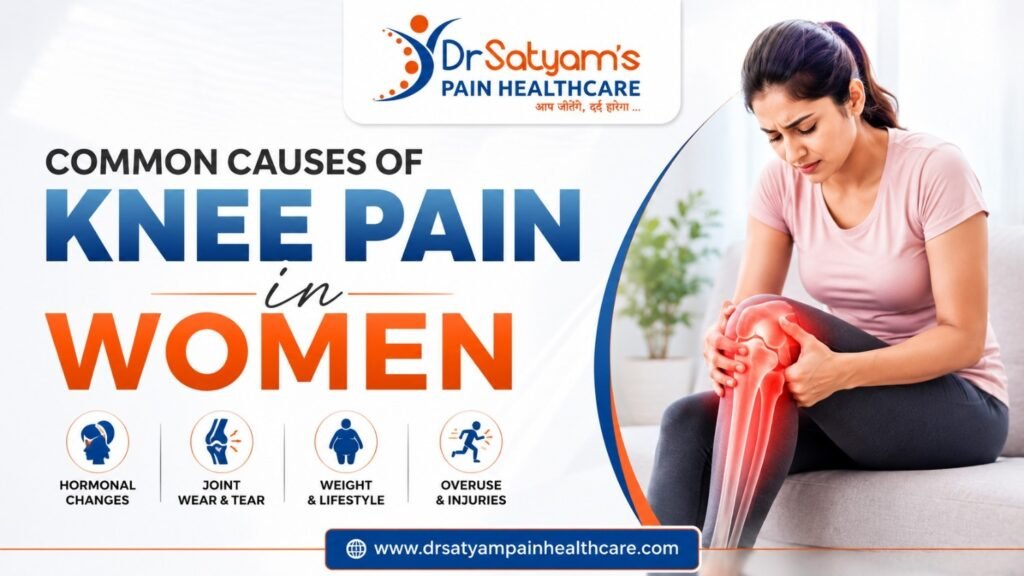
Knee pain is a common problem that affects many women and can make daily activities like walking, climbing stairs, or exercising difficult. Understanding the common causes of knee pain in women is important because early diagnosis and treatment can help prevent long-term joint problems.
From hormonal changes and aging to injuries and arthritis, several factors can contribute to knee pain in women. In this blog, we’ll explore the most common causes, symptoms, and effective treatment options to help you find relief and maintain healthy, active knees.
Why Are Women More Prone to Knee Pain?
Women are more likely to experience knee pain due to a combination of anatomical, hormonal, and muscular factors. Their body structure, hormonal changes, and differences in muscle strength can place additional stress on the knee joints, increasing the risk of injuries, arthritis, and chronic knee pain.
Differences in Female Anatomy
Women generally have a wider pelvis than men, which changes the alignment of the hips, knees, and ankles. This creates a larger “Q-angle” (the angle between the hip and knee), placing extra pressure on the knee joint. As a result, women may be more likely to develop knee pain while walking, running, or climbing stairs.
Hormonal Changes and Joint Health
Hormones play an important role in maintaining healthy joints. Changes in estrogen levels, especially during pregnancy, perimenopause, and menopause, can affect ligaments and cartilage. This may contribute to joint pain in women, knee stiffness, and an increased risk of conditions such as osteoarthritis.
Muscle Strength and Knee Stability
Strong muscles around the hips, thighs, and knees help support and protect the joints. However, women often have relatively weaker hip and quadriceps muscles, which can reduce knee stability. This may increase the risk of runner’s knee, ligament injuries, and other common causes of knee pain in women.
Lifestyle and Age-Related Factors
As women age, natural wear and tear on the joints can lead to knee cartilage damage and arthritis symptoms. Other factors such as excess body weight, poor posture, lack of physical activity, and previous injuries can further increase stress on the knees and contribute to long-term knee joint pain.
Common Causes of Knee Pain in Women
The common causes of knee pain in women can range from age-related joint changes to injuries, hormonal fluctuations, and lifestyle factors. Women are more likely to experience knee joint pain due to differences in body structure, muscle strength, and hormonal changes that affect joint health. Identifying the underlying cause is the first step toward effective treatment and long-term relief.
Osteoarthritis
Osteoarthritis is one of the most common causes of chronic knee pain in women, especially after the age of 40. It occurs when the protective cartilage in the knee gradually wears down, leading to pain, stiffness, swelling, and reduced mobility.
Patellofemoral Pain Syndrome (Runner’s Knee)
Often called runner’s knee, this condition causes pain around the kneecap. It is more common in women because of differences in hip and knee alignment. Symptoms usually worsen while climbing stairs, squatting, or sitting for long periods.
Meniscus Tears
The meniscus is a piece of cartilage that cushions the knee joint. Sudden twisting movements, sports injuries, or age-related wear and tear can cause a tear, resulting in pain, swelling, and difficulty moving the knee.
Ligament Injuries
Injuries to the ACL, MCL, or other knee ligaments can lead to severe knee pain and instability. These injuries are common among women who participate in sports or high-impact activities.
Obesity and Excess Weight
Being overweight places extra stress on the knee joints. Over time, this increased pressure can accelerate cartilage damage and contribute to knee pain in women, particularly during walking or climbing stairs.
Hormonal Changes and Menopause
Hormonal fluctuations, especially during menopause, can affect joint health and increase inflammation. Many women experience increased joint stiffness and knee pain after 40 due to declining estrogen levels.
Rheumatoid Arthritis
Rheumatoid arthritis is an autoimmune condition that causes the body’s immune system to attack healthy joints. It can lead to pain, swelling, stiffness, and long-term joint damage if left untreated.
Tendinitis and Bursitis
Repeated movements, overuse, or excessive strain on the knee can cause inflammation of the tendons or bursae. This often results in pain, tenderness, and swelling around the knee joint.
Risk Factors That Increase Knee Pain in Women
Several factors can increase the risk of developing knee pain in women. Understanding these risk factors can help you take early steps to protect your knee joints and prevent long-term problems.
Aging
As women get older, the cartilage that cushions the knee joint naturally wears down. This increases the risk of osteoarthritis, knee stiffness, and chronic knee pain.
Excess Body Weight
Being overweight places extra pressure on the knees during everyday activities like walking, climbing stairs, and standing. Over time, this added stress can lead to joint damage and persistent knee pain.
Hormonal Changes
Hormonal fluctuations during menopause can affect joint health and increase inflammation. This is one reason why knee pain after 40 in women becomes more common.
Lack of Physical Activity
A sedentary lifestyle can weaken the muscles that support the knees. Weak muscles provide less stability to the joint, increasing the risk of injury and knee discomfort.
Previous Knee Injuries
Past injuries such as ligament tears, meniscus injuries, or fractures can make the knee more vulnerable to future pain and mobility issues.
Poor Posture and Movement Patterns
Incorrect posture, improper walking habits, and poor body mechanics can place uneven stress on the knee joint, contributing to long-term wear and tear.
High-Impact Activities
Frequent running, jumping, or sports that involve sudden twisting movements can increase the risk of knee injuries, especially in women with muscle imbalances.
Vitamin D Deficiency
Low vitamin D levels may weaken bones and muscles, affecting overall joint health and increasing the likelihood of knee pain.
Symptoms That Should Never Be Ignored
While some discomfort may improve with rest, certain symptoms can indicate a more serious knee problem. If you are experiencing any of the following signs along with the common causes of knee pain in women, it is important to seek professional evaluation as early treatment can prevent further joint damage.
Persistent Knee Swelling
Swelling that lasts for several days may be a sign of inflammation, arthritis, ligament injury, or fluid buildup inside the knee joint.
Difficulty Walking or Bearing Weight
If knee pain makes it hard to walk, stand, or put weight on your leg, it could indicate a significant injury or underlying joint condition.
Knee Locking or Getting Stuck
A knee that suddenly locks or cannot fully bend or straighten may be caused by a meniscus tear or cartilage damage.
Sudden Instability or Knee Giving Way
Feeling like your knee may buckle or give out can be a sign of weakened ligaments, muscle imbalance, or joint instability.
Severe Pain While Climbing Stairs
Pain when climbing or descending stairs is often linked to patellofemoral pain syndrome (runner’s knee), a common cause of knee pain in women.
Knee Pain That Worsens at Night
Persistent knee pain, stiffness, or discomfort during the night may be associated with osteoarthritis, rheumatoid arthritis, or chronic joint inflammation.
How Knee Pain Is Diagnosed
Diagnosing knee pain starts with identifying the underlying cause. Since the common causes of knee pain in women can range from arthritis and ligament injuries to posture-related issues, a proper evaluation is important for effective treatment.
Physical Examination
The doctor will ask about your symptoms, medical history, daily activities, and any previous injuries. They will also check for knee swelling, tenderness, stiffness, and range of motion.
Posture and Movement Assessment
Poor posture, muscle imbalance, or abnormal walking patterns can place extra stress on the knee joint. Assessing movement helps identify issues that may be contributing to chronic knee pain.
Imaging Tests
If needed, imaging tests may be recommended:
- X-rays help detect arthritis, bone changes, and joint degeneration.
- MRI scans provide detailed images of ligaments, cartilage, tendons, and meniscus injuries.
Functional Evaluation
In some cases, specialists assess how your knees function during activities such as walking, climbing stairs, or squatting. This helps determine the exact cause of knee pain in women and allows for a personalized treatment plan.
Early diagnosis can help prevent further joint damage and improve recovery, especially when symptoms like persistent pain, swelling, or knee stiffness are present.
Effective Treatment Options for Knee Pain in Women
The best treatment for knee pain depends on its underlying cause, severity, and how long the symptoms have been present. Since the common causes of knee pain in women range from arthritis and injuries to hormonal changes and muscle weakness, a personalized treatment plan is often the most effective approach.
Conservative Treatment
For mild to moderate knee pain in women, doctors often recommend:
- Rest and activity modification to reduce stress on the knee joint
- Ice therapy to decrease pain and swelling
- Heat therapy to improve blood circulation and reduce stiffness
- Weight management to reduce pressure on the knees
- Supportive knee braces when needed
Physiotherapy for Knee Pain
Physiotherapy plays an important role in improving knee strength and mobility. A physiotherapist may recommend:
- Quadriceps and hamstring strengthening exercises
- Stretching exercises to improve flexibility
- Balance and stability training
- Posture correction techniques
These treatments can help reduce chronic knee pain in women and improve daily movement.
Chiropractic Care for Knee Pain
Chiropractic treatment focuses on improving joint alignment and body mechanics. For women experiencing knee joint pain, chiropractic care may help by:
- Correcting joint misalignment
- Improving posture and movement patterns
- Reducing strain on the knees
- Supporting long-term pain relief without surgery
Medical and Surgical Treatments
If conservative treatments do not provide relief, additional options may include:
- Pain-relieving medications
- Anti-inflammatory treatments
- Corticosteroid injections
- Minimally invasive procedures
- Knee replacement surgery for severe osteoarthritis
Best Exercises to Prevent Knee Pain in Women
Regular exercise is one of the best ways to prevent knee pain and keep your joints healthy. Strong muscles around the knee provide better support, improve stability, and reduce stress on the knee joint. For women, staying active can also help lower the risk of conditions that are among the common causes of knee pain in women, such as osteoarthritis, muscle weakness, and poor joint alignment.
Quadriceps Strengthening Exercises
Strong quadriceps help support the knee joint and reduce pressure on the kneecap. Simple exercises like straight leg raises and wall sits can improve knee strength and stability.
Hamstring Stretching
Tight hamstrings can increase strain on the knees. Gentle hamstring stretches improve flexibility, reduce knee stiffness, and support better movement.
Glute Strengthening Exercises
Weak hip and glute muscles can affect knee alignment and contribute to knee joint pain in women. Exercises such as glute bridges and clamshells help improve lower-body stability.
Low-Impact Cardio Activities
Walking, cycling, and swimming are excellent low-impact exercises that improve joint mobility without putting excessive stress on the knees. These activities can also help with weight management, reducing the risk of chronic knee pain.
Yoga for Knee Health
Yoga improves flexibility, balance, and posture while strengthening the muscles that support the knees. It can be especially beneficial for women experiencing mild knee stiffness or age-related joint discomfort.
Daily Tips to Keep Your Knees Healthy
Keeping your knees healthy can help reduce the risk of developing many of the common causes of knee pain in women. Simple daily habits can protect your knee joints, improve mobility, and prevent long-term discomfort.
Maintain a Healthy Weight
Excess body weight puts additional pressure on the knee joints, increasing the risk of knee pain in women, osteoarthritis, and joint wear. Maintaining a healthy weight can significantly reduce stress on your knees.
Stay Physically Active
Regular low-impact activities such as walking, swimming, and cycling help strengthen the muscles that support your knees. Strong muscles improve joint stability and lower the risk of injury.
Wear Supportive Footwear
Proper footwear helps maintain correct body alignment and reduces strain on the knees. Avoid wearing high heels for long periods, as they can increase pressure on the knee joints.
Improve Your Posture
Poor posture can affect the alignment of your hips, legs, and knees, leading to knee joint pain in women. Standing and sitting with proper posture helps distribute weight evenly across the body.
Stretch and Strengthen Regularly
Simple stretching and strengthening exercises for the quadriceps, hamstrings, and hip muscles can improve flexibility and reduce the risk of chronic knee pain in women.
Avoid Overloading Your Knees
Repeated squatting, jumping, or lifting heavy objects incorrectly can strain the knee joint. Take breaks during physical activities and use proper techniques to protect your knees.
When Should You See a Knee Pain Specialist?
While mild knee discomfort may improve with rest, persistent or worsening pain should not be ignored. If you are experiencing symptoms related to the common causes of knee pain in women, seeking professional evaluation can help prevent further joint damage and speed up recovery.
Signs You Need Professional Treatment
You should see a knee pain specialist if you experience:
- Knee pain lasting more than a few days
- Swelling, stiffness, or redness around the knee joint
- Difficulty walking, climbing stairs, or standing for long periods
- Knee instability or a feeling that the knee may “give way”
- Persistent pain during daily activities or exercise
- Reduced range of motion in the knee
- Knee pain accompanied by clicking, locking, or popping sounds
Benefits of Early Intervention
Early diagnosis can help identify the underlying cause of knee pain in women, whether it is arthritis, a ligament injury, runner’s knee, or another joint condition. Timely treatment often leads to faster recovery, better mobility, and a lower risk of chronic knee problems.
Why Delaying Treatment Can Worsen the Condition
Ignoring ongoing knee pain may allow the condition to progress, leading to increased inflammation, joint stiffness, cartilage damage, and reduced quality of life. Getting professional care at the right time can help manage symptoms effectively and keep your knees healthy and active for years to come.
Why Choose Dr. Satyam’s Pain Healthcare for Knee Pain Treatment in Varanasi?
If you are struggling with the common causes of knee pain in women, getting the right diagnosis and treatment is essential for long-term relief. At Dr. Satyam’s Pain Healthcare, we focus on identifying the root cause of knee pain in women rather than simply managing symptoms. Our personalized treatment approach helps improve mobility, reduce pain, and support faster recovery.
Comprehensive Assessment
Every patient receives a detailed evaluation to identify issues such as poor posture, joint misalignment, muscle imbalance, arthritis, ligament injuries, or other underlying causes of knee joint pain in women.
Non-Surgical Treatment Approach
We offer evidence-based, non-surgical therapies including chiropractic care, physiotherapy, manual therapy, dry needling, shockwave therapy, and rehabilitation exercises to help manage chronic knee pain in women and improve joint function.
Personalized Care Plans
Since every patient’s condition is different, treatment plans are customized according to age, symptoms, lifestyle, and the specific cause of knee pain.
Focus on Long-Term Relief
Our goal is not only to reduce pain but also to improve strength, flexibility, posture, and movement patterns to prevent future knee problems and support overall joint health.
Whether your knee pain is caused by arthritis, injury, menopause-related changes, or daily wear and tear, Dr. Satyam’s Pain Healthcare provides comprehensive knee pain treatment in Varanasi to help you return to an active and pain-free life.
Also Read: https://drsatyampainhealthcare.com/lower-back-pain-in-females/
Conclusion
Understanding the common causes of knee pain in women is the first step toward protecting your joint health and maintaining an active lifestyle. Conditions such as osteoarthritis, ligament injuries, hormonal changes, obesity, and knee joint pain in women can significantly affect daily activities if left untreated. Recognizing early symptoms and seeking timely care can help prevent long-term complications. Whether you are experiencing mild discomfort or chronic knee pain in women, the right treatment can improve mobility and quality of life. A combination of lifestyle changes, targeted exercises, physiotherapy, and chiropractic care can provide lasting relief. If your symptoms persist, consult a qualified specialist for personalized knee pain treatment in Varanasi and effective recovery support.
Frequently Asked Questions
1. What is the most common cause of knee pain in women?
One of the most common causes of knee pain in women is osteoarthritis, especially after the age of 40. Other frequent causes include ligament injuries, meniscus tears, obesity, and hormonal changes. These conditions can lead to pain, stiffness, swelling, and reduced mobility if not treated early.
2. Why are women more likely to experience knee pain than men?
Women are more prone to knee pain due to differences in body structure, wider pelvic alignment, hormonal fluctuations, and muscle imbalances. These factors can increase stress on the knee joint and contribute to conditions such as patellofemoral pain syndrome and arthritis.
3. Can menopause cause knee pain in women?
Yes, menopause can contribute to knee joint pain in women. A decrease in estrogen levels may affect joint lubrication and cartilage health, leading to stiffness, inflammation, and discomfort. Many women notice an increase in joint pain during and after menopause.
4. Why does my knee hurt when climbing stairs?
Pain while climbing stairs is often associated with runner’s knee (patellofemoral pain syndrome), cartilage wear, muscle weakness, or arthritis. The additional pressure placed on the knee joint during stair climbing can make underlying problems more noticeable.
5. How can I reduce knee pain naturally?
You can help reduce knee pain by maintaining a healthy weight, staying physically active, performing strengthening exercises, improving posture, and avoiding activities that place excessive stress on the knees. Early treatment and proper joint care can also prevent symptoms from worsening.
6. When should I see a doctor for knee pain?
You should consult a healthcare professional if your knee pain lasts for several weeks, affects walking, causes swelling, instability, or limits daily activities. Early diagnosis can help identify the exact cause and prevent long-term joint damage.
7. Can chiropractic care help with knee pain?
Yes, chiropractic care can help improve joint alignment, movement patterns, and overall biomechanics. When combined with physiotherapy and rehabilitation exercises, chiropractic treatment may help reduce pain, improve mobility, and support long-term recovery from certain knee conditions.
8. What are the best exercises for knee pain in women?
Low-impact exercises such as walking, cycling, swimming, quadriceps strengthening, hamstring stretches, and glute exercises can help support knee health. These exercises improve joint stability, flexibility, and muscle strength while reducing stress on the knees.
9. Does being overweight increase the risk of knee pain?
Yes, excess body weight places additional pressure on the knee joints. Over time, this can accelerate cartilage wear, increase inflammation, and raise the risk of osteoarthritis and chronic knee pain in women. Maintaining a healthy weight can significantly reduce knee stress.
10. Where can I get effective knee pain treatment in Varanasi?
If you are experiencing persistent knee pain, Dr. Satyam’s Pain Healthcare offers comprehensive knee pain treatment in Varanasi. Through personalized care, chiropractic treatment, physiotherapy, and advanced rehabilitation techniques, patients can receive targeted solutions for long-term pain relief and improved mobility.