
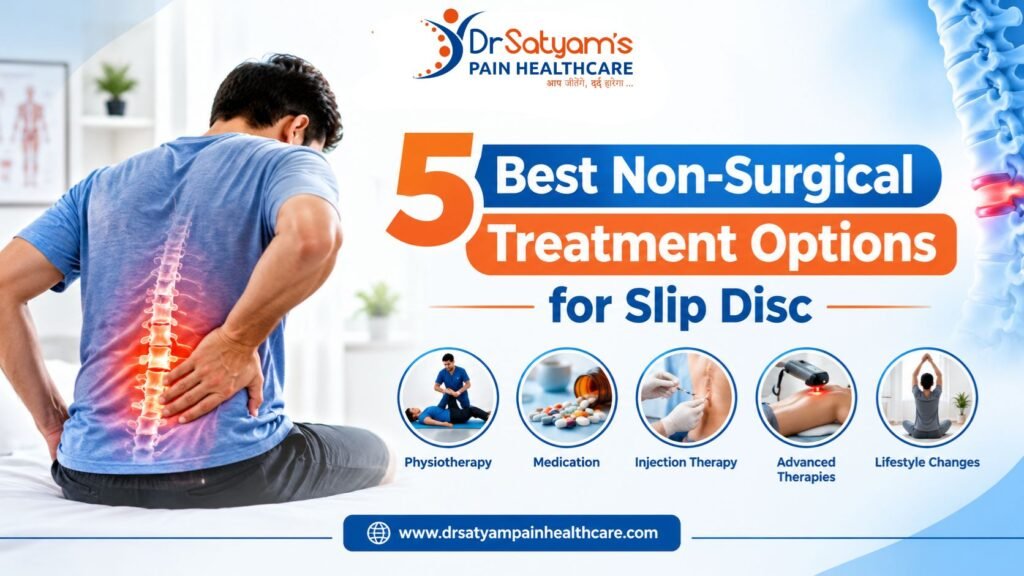
Back pain, tingling in the legs, or difficulty bending can make everyday life challenging. These problems may be caused by a slip disc, a condition in which a spinal disc bulges or herniates and may press on nearby nerves. The good news is that non-surgical treatment for slip disc can help many people manage pain, improve movement, and return to their daily activities without an operation.
But which treatment options work best, and how can you recover safely? In this guide, we will explore five non-surgical treatment options for slip disc, including physiotherapy, guided exercises, pain management, lifestyle changes, and selected supportive treatments. You will also learn how long recovery may take, which warning signs to watch for, and when to seek expert medical advice.
5 Best Non-Surgical Treatment Options for Slip Disc
1. Chiropractic Care and Spinal Adjustments for Slip Disc
Chiropractic care and spinal adjustments may help some people manage back pain and improve movement, but they are not suitable for every slipped disc. A slip disc, also known as a herniated disc, occurs when the soft inner material of a spinal disc pushes through its outer layer and may irritate nearby nerves. The right treatment depends on the location of the disc problem, the severity of symptoms, and whether nerve compression is present.
How Can Chiropractic Care Help With a Slip Disc?
Chiropractic care focuses on assessing and managing problems affecting the spine, joints, and surrounding muscles. Depending on the patient’s condition, a chiropractor may use gentle manual techniques alongside exercises and advice on movement.
Potential benefits may include:
- Improved mobility: Carefully selected manual techniques may help some patients move more comfortably.
- Relief from muscle tension: Gentle soft-tissue techniques may reduce discomfort associated with muscle tightness.
- Better movement and function: Chiropractic care combined with appropriate exercises may help some people return to everyday activities.
- Support for rehabilitation: A personalised treatment plan may include posture advice, activity modification, and strengthening exercises.
However, chiropractic treatment does not guarantee that a slipped disc will heal or return to its original position. Evidence for spinal manipulation in lumbar disc herniation is limited, and its suitability should be assessed individually.
What Is a Spinal Adjustment?
A spinal adjustment is a hands-on technique in which a trained practitioner applies a controlled force to a spinal joint. Some adjustments involve a quick, gentle thrust, while other manual techniques use slower movements or mobilisation.
Although spinal adjustments are sometimes included in chiropractic treatment for back pain, they should not be performed automatically when a slip disc is suspected or diagnosed. The practitioner must first assess the symptoms, medical history, and neurological function to determine whether manual treatment is appropriate.
Is Chiropractic Treatment Safe for a Slipped Disc?
The safety of chiropractic care depends on the patient’s condition and the technique used. Forceful spinal manipulation may be inappropriate for people with significant nerve compression, progressive neurological symptoms, certain spinal conditions, or other medical risk factors.
Before starting treatment, seek a qualified healthcare professional’s assessment, particularly if you experience pain travelling down an arm or leg, persistent numbness, or muscle weakness. Stop treatment and seek medical advice if symptoms worsen.
Seek emergency medical care if you develop new loss of bladder or bowel control, difficulty passing urine, numbness around the groin or saddle area, or rapidly worsening leg weakness. These symptoms may indicate serious nerve compression and should not be treated with spinal adjustments.
Chiropractic Care vs. Physiotherapy for Slip Disc
Chiropractic care may include manual techniques to address movement-related symptoms, while physiotherapy commonly emphasises individualised exercises, gradual strengthening, mobility, and functional rehabilitation. The approaches can overlap, and neither should be considered universally best for every patient.
For many people with a slipped disc, an active rehabilitation plan that includes appropriate movement and exercise is an important part of conservative care. Manual therapy, if considered, should complement rather than replace rehabilitation and medical assessment when necessary.
Should You Consider Chiropractic Treatment for a Slip Disc?
If you are considering chiropractic treatment for a slipped disc, choose a qualified practitioner who performs a thorough assessment, explains the potential benefits and risks, and refers you for further medical evaluation when needed. Avoid anyone who promises to permanently fix a disc through adjustments alone.
At Dr Satyam’s Pain Healthcare in Varanasi, patients seeking help for back pain or suspected slip disc symptoms should receive guidance based on their individual condition and treatment needs. A proper assessment can help determine whether conservative care, physiotherapy, manual techniques, or referral to a specialist is appropriate.
2. Targeted Physical Therapy & McKenzie Method for Slip Disc
Physiotherapy is one of the key non-surgical treatment options for a slip disc. A personalised physical therapy programme can help reduce pain, improve movement, strengthen supporting muscles, and make daily activities easier. The McKenzie Method, also known as Mechanical Diagnosis and Therapy (MDT), is one approach a trained physiotherapist may use to assess how different movements affect your symptoms and guide your recovery.
The right exercises depend on the location of the slipped disc, your symptoms, and whether a spinal nerve is irritated. Not every exercise is suitable for every person, so treatment should be tailored to your condition.
How Does Physical Therapy Help With a Slipped Disc?
A physiotherapist may recommend a combination of treatments based on your symptoms and physical assessment.
- Pain-relieving movement: Gentle, appropriate movements may help reduce stiffness and make daily activities easier.
- Core strengthening: Gradual exercises can improve the strength and endurance of the muscles that support the spine.
- Mobility exercises: Carefully selected movements can help restore comfortable movement in the back and hips.
- Posture and movement training: Learning safer ways to sit, bend, lift, and change positions can help manage symptoms during daily activities.
- Progressive rehabilitation: As symptoms improve, the exercise programme can gradually build strength, confidence, and functional ability.
The aim of physiotherapy for slip disc is to improve pain, movement, and daily function—not to promise that every herniated disc will return to its original position. Exercise programmes should be individualised to the person’s needs and tolerance.
What Is the McKenzie Method for Slip Disc Treatment?
The McKenzie Method, or Mechanical Diagnosis and Therapy (MDT), is an assessment and treatment approach used by trained healthcare professionals for musculoskeletal problems, including certain types of lower back pain.
It involves assessing how repeated movements and different positions affect a person’s symptoms. Based on the findings, the therapist may recommend specific exercises, movement strategies, and advice for managing symptoms independently.
3. Non-Surgical Spinal Decompression Therapy for Slip Disc

Non-surgical spinal decompression therapy is a treatment that uses a specialised table or traction device to apply a controlled pulling force to the spine. It is intended to reduce pressure on spinal structures and may provide temporary relief for some people with lower back pain. However, spinal decompression is not a proven cure for every slip disc, and research has not established consistent long-term benefits.
How Does Non-Surgical Spinal Decompression Work?
During spinal decompression therapy, a patient lies on a treatment table while a device applies a controlled pulling force to the spine. The force and duration depend on the equipment and treatment protocol.
The aim is to create a gentle distraction between spinal segments. Some providers suggest that this may reduce pressure around irritated spinal nerves, but the proposed mechanisms do not guarantee that a herniated disc will return to its original position.
This treatment may be considered as part of a broader slip disc treatment plan following an appropriate clinical assessment.
Can Spinal Decompression Help a Slip Disc Without Surgery?
Spinal decompression or traction may provide short-term symptom relief for some patients, but the evidence remains limited and mixed. A clinical review found weak evidence for long-term benefits from traction, while the World Health Organization recommends against its routine use for chronic primary low back pain because the benefits are uncertain.
A healthcare professional should assess whether this treatment is appropriate based on the patient’s symptoms, medical history, and neurological findings.
Who Should Consider Spinal Decompression Therapy?
A clinician may discuss different conservative treatment options with people experiencing persistent back pain or symptoms associated with a herniated disc. However, spinal decompression should not automatically be recommended simply because an MRI shows a slipped disc.
4. Targeted Contrast Therapy (Hot & Cold Therapy) for Slip Disc
Targeted contrast therapy involves using heat and cold to help manage pain and discomfort associated with a slip disc. Cold therapy may help reduce pain and temporarily numb a sore area, while heat therapy can relax tight muscles and improve comfort. Some people alternate between the two, but contrast therapy does not repair a herniated disc or remove pressure from a compressed nerve.
When used appropriately, hot and cold therapy may complement other non-surgical slip disc treatment options, such as physiotherapy, guided exercises, and activity modification.
How Does Hot and Cold Therapy Help Relieve Slip Disc Pain?
Cold therapy: Applying a cold pack wrapped in a thin towel for around 10–15 minutes may temporarily ease pain, particularly when the area feels sore after activity. Never apply ice directly to the skin.
Heat therapy: A warm compress or heating pad on a low setting may help relax tight muscles, reduce stiffness, and make gentle movement more comfortable. Apply it for around 15–20 minutes, ensuring the temperature is comfortable and not hot enough to burn the skin.
Contrast therapy: Some people alternate between gentle warmth and cold for comfort. However, there is limited evidence that alternating hot and cold is more effective for slip disc pain than using either method alone. Choose the method that provides relief rather than assuming both are necessary.
How to Use Hot and Cold Therapy Safely for a Slip Disc
- Wrap cold packs in a towel and use them for short periods.
- Use gentle warmth rather than intense heat, especially if the affected area is sensitive.
- Never sleep with a heating pad or ice pack in place.
- Avoid heat or cold on areas with reduced sensation or poor circulation unless a healthcare professional advises it.
- Stop immediately if you experience burning, skin discolouration, increased pain, or unusual numbness.
Is Hot or Cold Therapy Better for a Slipped Disc?
Neither is universally better. Cold may be more comfortable when pain feels irritated after activity, while heat may help when muscle tightness or stiffness is the main concern. Try the option that feels more comfortable, provided you can safely sense temperature in the affected area.
5. Ergonomic & Active Lifestyle Modifications for Slip Disc
Ergonomic adjustments and an active lifestyle can help manage slip disc symptoms, improve daily movement, and support recovery without surgery. Along with appropriate physiotherapy, simple changes to your sitting posture, sleeping position, lifting technique, and daily activities may reduce unnecessary strain on your spine. However, these changes do not guarantee that a slipped disc will heal, and the right approach depends on your symptoms.
1. Maintain a Comfortable Sitting Posture
Prolonged sitting, especially in a position that aggravates your symptoms, may increase discomfort for some people with a slipped disc.
- Support your lower back: Use a chair with comfortable lumbar support or place a small cushion behind your lower back.
- Keep your feet supported: Place your feet flat on the floor, with your hips and knees in a comfortable position.
- Avoid sitting for too long: Change positions regularly and take short walking breaks.
- Adjust your workstation: Keep your computer screen near eye level to avoid leaning forward or bending your neck for extended periods.
2. Stay Active With Gentle, Regular Movement
Gentle activity is generally preferable to prolonged bed rest when managing a slip disc, provided the movement does not significantly worsen your symptoms.
Consider these activities:
- Walking: Start with a comfortable distance and gradually increase it as tolerated.
- Gentle mobility exercises: Follow movements recommended by your physiotherapist based on your symptoms.
- Frequent movement breaks: Stand up, walk around, or change your position during long periods of sitting.
- Gradual return to normal activities: Increase your activity level progressively instead of suddenly returning to strenuous exercise.
3. Use Safe Lifting and Bending Techniques
Incorrect or uncomfortable lifting movements can aggravate back pain, particularly during a painful flare-up. When lifting everyday objects:
- Keep the object close to your body.
- Bend your hips and knees as comfortable rather than repeatedly rounding your lower back.
- Avoid twisting your spine while carrying a heavy object; turn your feet and body together.
- Ask for help with heavy loads.
- Avoid lifting objects that trigger sharp or radiating pain.
4. Choose a Comfortable Sleeping Position
A comfortable sleeping position may help you rest better when dealing with slip disc pain, although no single position works for everyone.
- Side sleeping: Try placing a pillow between your knees if it makes your back feel more comfortable.
- Back sleeping: A pillow beneath your knees may reduce discomfort for some people.
- Mattress support: Choose a mattress that feels supportive and allows you to sleep comfortably.
- Getting out of bed: If twisting aggravates your pain, roll onto your side and use your arms to help yourself sit up.
5. Avoid Prolonged Bed Rest and Sudden Strenuous Exercise
Resting briefly may be helpful during severe discomfort, but staying in bed for long periods can contribute to stiffness, reduced strength, and difficulty returning to normal activities.
During recovery from a slipped disc, avoid suddenly starting heavy weightlifting, high-impact workouts, or exercises that consistently worsen your symptoms. Instead, maintain gentle activity as tolerated and follow a progressive exercise plan.
Important: Do not push through worsening nerve pain or new muscle weakness simply to remain active.
6. Build Healthy Daily Habits That Support Recovery
Lifestyle changes work best alongside an appropriate treatment plan. To support your recovery:
- Maintain a regular sleep schedule.
- Eat a balanced diet that supports overall health.
- If you are overweight, consider gradual, sustainable weight management where appropriate.
- Avoid smoking, which is associated with poorer spinal disc health.
- Follow your prescribed physiotherapy programme consistently.
- Attend follow-up appointments if symptoms persist or your recovery stalls.
Why Choose Dr Satyam’s Pain Healthcare for Slip Disc Treatment?
Choosing the right clinic for slip disc treatment is an important step towards managing pain and improving mobility. Dr Satyam’s Pain Healthcare in Varanasi focuses on personalised pain management, chiropractic care, and physiotherapy to help patients address back pain, restricted movement, and related musculoskeletal concerns. The treatment approach should be based on each patient’s symptoms, physical assessment, and recovery goals.
Here is why patients considering non-surgical slip disc treatment may explore care at Dr Satyam’s Pain Healthcare:
1. Personalized Treatment Plans
Every slipped disc is different. The treatment plan should consider the location of the disc problem, pain severity, mobility limitations, and any symptoms affecting the nerves. An individualised approach helps determine which exercises, rehabilitation techniques, and pain-management strategies may be appropriate.
2. Physiotherapy and Rehabilitation Support
Physiotherapy can help suitable patients improve movement, build strength, and gradually return to everyday activities. Guided exercises and activity modification may form important parts of a non-surgical slip disc treatment plan, depending on the clinical assessment.
3. Chiropractic Care for Selected Patients
Chiropractic care may help some patients manage musculoskeletal pain and movement restrictions. However, spinal manipulation is not suitable for everyone with a herniated disc, particularly when significant nerve compression or worsening neurological symptoms are present. A careful assessment is essential before selecting any hands-on treatment.
4. A Focus on Long-Term Function and Recovery
Effective slip disc management involves more than temporary pain relief. Appropriate rehabilitation may include movement education, posture guidance, strengthening exercises, and advice on returning safely to daily activities. Progress should be monitored, and the treatment plan adjusted according to the patient’s response.
5. Local Care in Varanasi
For people looking for slip disc treatment in Varanasi, Dr Satyam’s Pain Healthcare offers a local option to explore chiropractic care and physiotherapy for back pain and related musculoskeletal problems. Patients should discuss their symptoms, treatment options, expected benefits, and limitations with the treating clinician before starting care.
Looking for non-surgical slip disc treatment in Varanasi? Contact Dr Satyam’s Pain Healthcare to enquire about an assessment and discuss which treatment options may be suitable for your condition.
Also Read: https://drsatyampainhealthcare.com/9-treatment-for-chronic-lower-back-pain/
Conclusion
Choosing the right treatment can make a difference when managing a slipped disc and its related symptoms. The 5 best non-surgical treatment options for slip disc include physiotherapy, guided exercises, doctor-supervised pain management, carefully selected manual therapy, and lifestyle modifications. The most suitable approach depends on your symptoms, nerve involvement, and overall health. With appropriate slip disc treatment without surgery, many people can improve their mobility and manage pain effectively. If you are looking for slip disc treatment in Varanasi, Dr Satyam’s Pain Healthcare can be a local option to explore physiotherapy and chiropractic care. Seek medical assessment to understand your condition and choose a safe, personalised treatment plan.
Frequently Asked Questions
1. What is the best non-surgical treatment for a slip disc?
Physiotherapy and guided exercise are commonly used to help manage a slipped disc and improve mobility. Depending on your symptoms, treatment may also include doctor-guided pain management and activity modification. The best approach depends on your individual condition and clinical assessment.
2. Can a slip disc heal without surgery?
Yes, many slipped discs improve without surgery as symptoms settle and the body gradually recovers. Conservative care may include physiotherapy, suitable exercises, and pain management. However, recovery varies, and some people require specialist treatment or surgery.
3. Which exercises are best for a slipped disc?
Suitable exercises may include gentle walking, prescribed mobility exercises, and gradual strengthening activities. The right exercises depend on the location of the disc problem and your symptoms. Stop any movement that significantly worsens radiating pain, numbness, or weakness, and seek professional guidance.
4. How long does it take to recover from a slip disc without surgery?
Recovery time varies according to the severity of the disc herniation, nerve involvement, and response to treatment. Some people improve within a few weeks, while others need several months or longer. Persistent or worsening symptoms should be assessed by a healthcare professional.
5. Is physiotherapy effective for slip disc treatment?
Physiotherapy can help reduce disability, improve movement, and support recovery in people with a slipped disc. A personalised programme may include therapeutic exercises, movement education, and gradual strengthening. Results vary, and physiotherapy cannot guarantee that every disc problem will resolve completely.
6. Can walking help relieve slip disc pain?
Gentle walking can help many people maintain mobility and avoid prolonged inactivity during recovery. Start with a comfortable distance and adjust according to your symptoms. If walking worsens leg pain significantly or you develop new weakness, seek medical advice.
7. Can a slip disc be treated at home?
Mild symptoms may improve with appropriate activity modification, short walks, comfortable positioning, and heat or cold for temporary relief. However, home care does not replace professional assessment when pain persists or neurological symptoms develop. Seek emergency care for bladder or bowel changes or numbness around the groin.
8. When does a slip disc require surgery?
Surgery may be considered when severe symptoms persist despite appropriate non-surgical treatment or when significant nerve problems develop. New bladder or bowel dysfunction, saddle-area numbness, or rapidly worsening weakness requires emergency assessment. Not every slipped disc needs an operation.
9. Is chiropractic treatment safe for a slipped disc?
Chiropractic treatment may help selected patients with certain musculoskeletal symptoms, but spinal manipulation is not suitable for everyone with a slipped disc. A qualified clinician should assess symptoms and nerve function before recommending hands-on treatment. Progressive weakness or signs of serious nerve compression require prompt medical evaluation.
10. Where can I get slip disc treatment in Varanasi?
If you are looking for slip disc treatment in Varanasi, you can enquire at Dr Satyam’s Pain Healthcare about its physiotherapy and chiropractic services. Discuss your symptoms and medical history with the treating clinician to determine suitable options. Choose a treatment plan based on an appropriate assessment rather than a guaranteed promise of recovery.